Showing posts with label science fiction. Show all posts

Sunday, October 14, 2018

EBP Launches New Anthology


At long last, Elephant’s Bookshelf Press is launching a new anthology effort!

So, what is the genre? Science fiction.

In a sense, it’s a way for me to go back to my beginnings, because when I started writing, my primary focus was on science fiction.

The best EBP anthologies to date have all had an overarching theme, and I think we have something unique and interesting to shoot for in this anthology.

The unifying theme of these short stories will be Flight.

One of the reasons I like this theme is because it’s a term that has multiple meanings and therefore multiple interpretations. Of course, flight can involve human or alien spaceships, heroes with super-human abilities, winged creatures, but it just as easily could include flight from danger. Heck, I bet there’s a clever person out there who can make a flight of stairs into a vital element of a science fiction story.

I don’t want to be too restrictive in this description. The story should incorporate flight; I leave the details to you.

For our anthology, the stories can be up to 5,000 words long. No erotica.

The submission deadline is January 15. There is no payment, though the published authors will receive both a paperback and electronic edition of the completed anthology.

(This will likely be the first EBP paperback since the demise of CreateSpace, but I’ve been told that this process will be as straight forward as what we had grown accustomed to.)

An early spring publication is my target.

Our team will review the stories as they come in.

Feel free to ask any questions. Send them to matt@elephantsbookshelfpress.com, and I’ll reply as soon as I can.

Friday, March 21, 2008

Ad Astra, Sir Arthur, Don't Forget to Write


Arthur C. Clarke, the author of numerous science and science fiction dreams and books, died this week. While he's best known for writing 2001: A Space Odyssey, which Stanley Kubrick made into one of the all-time greatest films, Clarke was a prolific writer (author of nearly 100 books) and a great thinker. Though his idea was considered by his attorney too crazy to be worth patenting, he is credited as the first to imagine telecommunications satellites.

His idea was proposed in a scientific paper he wrote in 1945 (Sputnik launched in 1957), which showed the feasibility of satellites that stayed in geostationary orbit around the earth. That now well-trafficked area of space has since been officially designated the Clarke Orbit. According to Clarke's New York Times obituary:

[That paper was] "the most important thing I ever wrote." In a wry piece entitled, A Short Pre-History of Comsats, Or: How I Lost a Billion Dollars in My Spare Time, he claimed that a lawyer had dissuaded him from applying for a patent. The lawyer, he said, thought the notion of relaying signals from space was too far-fetched to be taken seriously.

But Clarke wrote much that his millions of readers took very seriously. My personal favorite book of his is Childhood's End. Like 2001, which came later, this work included a benevolent yet removed presence that watches over -- even mentors -- humanity. They step in and stop warfare among nations, but their real goal is to prepare them for the next, awkward step in their evolution.

I never met or interviewed Clarke, who lived for the past half century in Sri Lanka, but he contributed a video commentary to Space Day in 2001, which I covered. The event, held at the Smithsonian Air and Space Museum, was special for me, in part because I love space but also because I had the chance to meet and interview John Glenn, the first American to orbit the planet and a former U.S. senator from Ohio. Clarke said to the crowd of mostly school children that among them might be sitting the first person to set foot on Mars.

That comment came back to me after watching a statement (available on YouTube video) that Clarke gave upon the announcement of the Google Lunar X Prize. The announcement of the $30 million competition, challenging a privately funded team to send robot up to the moon, came last September. As he did on Space Day 2001, Clarke offered a taped statement and spoke about things like the fiftieth anniversary of Sputnik, which occurred in October.

"I was always sure that humanity would reach the moon," he said, "but I didn't really believe I would live to see it. And I'm sure I didn't believe I'd live to see it end. ... We need to go to the moon for the right reasons. We need to find the models for markets of profitable operations that would inspire entrepreneurs and business leaders as well as our scientists and engineers. That's the only way to ensure permanence."

He went on to say that he hoped to one day enjoy one of the nongovernmental suborbital flights that he believed would be actively taking passengers before this decade is over. That sounds like a tall order, (assuming he means, as most people erroneously do, that the decade ends when 2010 begins; it ends when 2010 ends), but Clarke was not one to shrink from his dreams.

Peter Diamandis, who chairs the X Prize Foundation, offered his thoughts after the death of his friend, Sir Arthur. He wrote,
"Arthur once said, there are three phases to a great idea: 'The first phase is when people tell you it’s a crazy idea, it will never work; the second phase is when people say, it might work, but it’s not worth doing; and the third phase is when people say, I told you that was a great idea all along!' We at the X PRIZE Foundation know that feeling ... and Arthur was one of my great supporters to pursue the original Ansari X PRIZE, and the many prizes that followed. Thank you Arthur for encouraging our crazy ideas!"

Thank you, indeed, Sir Arthur, for dreaming big and encouraging others to dream too. Like you did, I hope one day to venture off this wonderful home planet. I can't think of a better way to truly learn the most about humanity and appreciate what we have here on earth than to view it from a distance and return to the cradle of life to share what has been learned.

Sunday, November 04, 2007

NaNo WriMo: This Is Fun!


Before I go too far, I was looking for an image to depict juvenile aliens, and when I found the one I finally selected, I couldn't help but laugh. Every once in a while, the world needs a little PG-13 in an otherwise family-friendly site.

Anyway, back to my point: While I'm nowhere near the pace I need to reach my goal of 50,000 words, I'm enjoying the story I've created for my NaNo WriMo entry. It's a quasi-science fiction work. I won't go into too much detail here, but I'm writing about alien abductions (no, I've never experienced one, thank God) and college. And it's chock full of goofy stuff and oddball characters, which is as I like it. I generally write serious stuff in which some characters might have a good sense of humor, but I've been reading a lot of Christopher Moore the past year or so, and I'm really enjoying the funny, irreverent way he can tell a story. This is my homage to Christopher Moore.

Hopefully, some of my fellow writers will visit. Stop for a moment and sip from your coffee cup (or mine). Talk some trash, spin a yarn, or cast aspersions. I won't judge.

Friday, October 19, 2007

Fan Fiction


As a Star Trek fan, I'll admit that it's crossed my mind to write stories involving characters like Captain Kirk, Mr. Spock, Dr. McCoy, Scotty, and the rest of the crew. I never did, but throughout my younger years I dreamed of joining the crew of the Enterprise -- "No bloody A, B, C, or D," as Scotty said in the "Reunion" episode of The Next Generation.

Of course, I grew up. Got interested in girls. Found my true love. And generally found myself more interested in writing about the characters springing up in my head, rather than those that already "existed" in television or movie history.

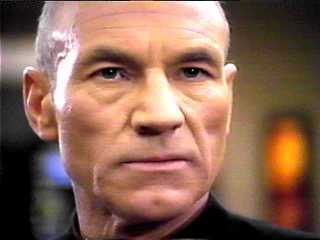
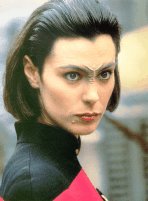
It had never occurred to me that there might be money to make in writing fan fiction, but apparently some people do that sort of thing and it's even becoming respectable. Far be it for me -- an unpublished novelist -- to pooh pooh the works of those who have several books under their belt, expanding the universe of characters I hold dear. Indeed, some writers are able to do quite well in that genre, and there's something to be said for claiming a piece of Captain Picard or Ensign Ro for posterity.

But I'm learning about the people in my head right now. Maybe sometime in the future, I'll worry about those already created.

Friday, June 08, 2007

Do Dead Writers Dream of New York Times Editorials?


Philip K. Dick, the author of numerous science fiction classics including Do Androids Dream of Electric Sheep?, which was the basis for the film Blade Runner, has been recognized in a New York Times editorial today. While I don't know that I'd put him above some of my literary heroes such as the recently departed Kurt Vonnegut, Dick had a knack for telling wonderfully engaging stories set in surprisingly recognizable futures. Give this a read, and after you've done that, enjoy one of his books or short stories.