Showing posts with label fiction. Show all posts

Tuesday, April 13, 2010

Interviews Galore

As someone who writes for a living — both as a journalist covering a distinct beat and as a freelancer of various stripes — I often find myself conducting interviews. Sometimes I just get into journalist mode and put any unsuspecting rube who crosses my path or sits on the barstool beside me under an impromptu game of 20 questions.

But lately, since I kinda call a lot of the shots for my full-time gig, I don't get to do many interviews. Perhaps that seems counterintuitive, but I won't bore you with the details. Suffice it to say, I don't have a lot of time to conduct the types of thorough interviews I enjoy doing.

Tomorrow, however, that will not be the case. I'm interviewing a leader of a major nonprofit arts organization (which I won't divulge here; I try not to mix work with pleasure too much, the same way some children don't let the brocolli touch the chicken.) And later I'll be interviewing someone for my college's alumni publication. Beyond that, I hope to conduct another interview with the researcher who works in Antarctica to get some more details about life there for my novel.

Which brings me to my point. Do you as writers of fiction feel you know how to conduct interviews? Do you wish you were a journalist? Or were you like me when I graduated from college aspiring to be a Writer (emphasis and capital letter added for pomposity).

Well, from my perspective it's good to conduct interviews to keep those intellectual muscles in shape. Because readers ask questions. They may just let them linger in their brain, but don't you love it when you're thinking about these characters and then all of a sudden a scene emerges that basically addresses exactly what you were thinking about? A character's love life? Why does he do certain things day in day out? What does she see in that new guy in accounting?

If you don't already, give it a try: conduct interviews. Chat with your kids. If they're teens, grill them about what's going on with their lives and those of their friends. You may not like the answers, but if you can use it in your fiction, perhaps it's useful on multiple levels.

Saturday, January 17, 2009

It's True, Fiction Is on the Rise!

Now this is good news! The National Endowment for the Arts is reporting that fiction is becoming increasingly popular.

After twenty-five years — a generation — the downward trend toward reading fiction has reversed. But this report asks people whether they've read at least one novel, short story, poem or play in the past twelve months. One. Uno. I believe most people have at least one imaginative thought per day. Can't more than half of America read more than one piece of literature during a year?

I'll take the good news and happily praise Americans for getting back on their duffs as long as they're reading literature — even bad poetry is better than nothing at all.

But I look forward to the day when at least 15 percent of Americans say they read at least one piece of literature per month. I haven't drilled down into the report to see how far off from that mark we are, but I don't expect it's anywhere near that.

So read up, America! Fiction, nonfiction, newspapers, poetry. Order a subscription to One Story or visit your local library. Imagine gas is still close to $5 a gallon and take the train, where you can read during your commute.

And while you're at it, imagine. Imagine a world without literature. It's a dark, dismal place. People are despondent, hopeless, angry. It's worse than what you see today, because half of America reads literature. But if everyone read just a little bit, I suspect the world would become a bit brighter, a bit more hopeful. Perhaps it might even spur the imagination and inspire ways to turn the economy around. Just imagine!

Saturday, December 27, 2008

2009: Predictions for the Year in Reading

Soon we will turn the page on 2008. To my mind, not a bad year over all, though I know of many people who don't have the same affection for 2008. I have much to be thankful for: a good year at work, though I can do more; the joy of impending fatherhood; I got my novel in shape to be seen by agents. And I read a lot of books.

I'm not quite prepared to go over what I read that most impressed me. (After all, who really cares what someone else has read, unless they can say well why someone else should read it?) But I think I can offer a few thoughts about what I and other hardcore readers will be reading in 2009.

I expect to see lots of Dress for Success and job-search books on the trains this coming year. I don't know whether ye olde What Color Is Your Parachute is still a go-to help book in this Internet, "information era" age, but there's probably something of that ilk that'll be flying off the shelves -- at least at the library, since no one has any money any more.

Other books of choice will be along the lines of "How to do more with less." As someone who grew up with Depression-era parents, I feel well indoctrinated about that sort of lifestyle. I've always been frugal, and with my kids on the way, I'm sure that'll continue.

I suspect that there'll be a renewed interest in stories of the 1970s, because that's the era that will be most similar to what we're embarking on. The Great Depression, with its breadlines and Hoovervilles just doesn't seem quite as likely as the '70s lunchbox, baby-sitting relatives, PBJ sandwiches, TV dinners, and other forms of parsimony. I wonder if That '70s Show will stage a revival...

But I'm a fiction writer. What's in it for me? I honestly don't know. I suspect that fiction could become slightly less popular than it already is — and it's already fairly unpopular. So read up America! Fiction, nonfiction, whatever you enjoy. And keep or gain employment. Keep this country literate and great!

Tuesday, September 30, 2008

The Truth About Fiction

I ran across a nice little Q&A in the Washington Post. It's an interview with Professor Bonnie Libby, who teaches literature at the University of North Carolina, Greensboro.

I don't know Professor Libby, and I don't know if she and I would agree on everything, but that's quite all right. I found this quote interesting:

"[W]e talk about the constant allure of sin, and that too often vice (especially our own) does not disgust us. Good literature should illuminate this human tendency and make us care to correct it. Certainly, literature often depicts the baser aspects of human nature; otherwise it wouldn't be true. But many times, we Christians get hung up on the obvious vices like profanity or sexual immorality, while dismissing more prevalent and pernicious moral evils like pride, superiority and envy."

As someone who has written a novel that includes a healthy dose of sin and vice as well as profanity and sexual immorality, I say: Amen.

Saturday, March 22, 2008

Attack on the Memoir?


There was a story the other day in the New York Times about a British writer who was not allowed to come into the United States, where he was going to attend an opening party for his new book, Dandy in the Underworld, which is a memoir.

I've not heard of this guy, Sebastian Horsely, before, though I'm not much for memoirs, which seem to have pushed the novel further into the background of the literary world. His work is about his experiences as a drug abuser and frequent user of prostitutes. He chronicles his trips to the Philippines, where a photographer took pictures of him being hung from a cross. (Buy the book, just in time for Easter! Good God, what has this world come to?) Presumably, that's where the image I found online and borrowed for this post came from.

Memoirs and memoirists have had some trouble the past couple of years -- especially in recent weeks -- and I couldn't help but wonder whether, in a way, this decision by the United States is a way to challenge whether Horsely really was telling the truth. What Horsely has that "Margaret Jones" didn't have was indisputable truth that he'd done these things -- at least the mock crucifiction. Jones's tale, while reportedly poignant and stunning, is not her personal experience. Ergo, not memoir. Thank you, try again.

Personally, I have no trouble with fiction. I love reading it and writing it. I believe most readers who say they prefer nonfiction because they want to read about what is real are simply lazy. They literally have not exercised their imagination. Shame on them. A good story -- especially fiction -- should feel real to a reader, otherwise there is no believability and ultimately the work will wither and die on the vine.

I'd like to believe that Margaret Jones, whose real name is Margaret Seltzer, could simply have converted the story to fiction. As the New York Times blog post suggests, that's not always easy. But at least it's honest.

As for Mr. Horsely, well, if I read the article correctly it said that he was trying to get into the United States without a visa -- which, reportedly, is still possible for British folks, as long as they haven't been convicted of a crime involving moral terpitude. Perhaps I'm reading it wrong. I'd have expected his publisher or agent to have checked into securing a visa, but the article is silent on that point.

I doubt I'll be reading about the book about the dandy. I can't relate to drug abuse and using prostitutes, and I don't care to live vicariously through him. I imagine he'll be in the United States eventually to sell another book. Or perhaps the next we hear of him, he'll be admitting that he made stuff up for his book. As he told the Time Out London, "It's better to be quotable than honest."

Sunday, January 20, 2008

The Backstory of the Lock


This woman had a good idea, especially for readers who are into 18th century literature. Since I've been doing some research on the American naval hero John Paul Jones, I've regained some perspective on the 18th century -- an era I don't think I've given much thought since junior high history class. I studied Alexander Pope's Rape of the Lock in college, but I've mostly forgotten about it.

Professor Sophie Gee, who is teaching at Princeton University, decided to write about the story of what led up to the tale described in the epic poem. Her debut novel, The Scandal of the Season, was published last year by Scribner. In a release that appeared on Princeton's Web site, she explained how she came to write about the real people who were the basis of Pope's mock-epic. Pope came to London as a poor aspiring writer and is able to insinuate himself in the world of the characters of the Rape.

"As a scholar you try never to jump from fact to fiction," Gee said. "At first I was extremely uncomfortable about it, but then I realized that what I was doing was giving a psychologically compelling account of what we do know, putting in feelings along with historical facts."

She's conscious of the danger of a professor creating fiction out of real people. One of Gee's challenges was to write the scene in which Pope and Swift meet for the first time, according to the release. She knew they had met in London during the period in which the novel is set, so she imagined the rendezvous at the opera, penning a scene in which the young Pope approaches Swift as he scoffs at the vanity of some fellow clergy members in the audience. The two writers later became great friends.

"It was thrilling to have a chance to inhabit a historical moment like that, because it was such a momentous literary encounter," she said.

But she has received strong reviews. The New York Times Book Review described it as "a clever and inviting piece of critical biography masquerading as a light comedy of manners."

In her teaching she is able to make the archaic references of 18th century literature accessible to today's teen agers and young twenty-somethings. For example, she juxtaposes the great satirist Jonathan Swift with the premier satirists of today: Trey and Matt of South Park fame.

I can tell I'd like this woman. She has always wanted to be a writer, she recognizes that a writer needs to be a strong reader, and she loves Irish literature. I'd enjoy spending a pleasant pub conversation with professor Gee!

Monday, November 26, 2007

Why Do You Read?


I just noticed this article, which appeared over the Thanksgiving weekend in the New York Times. It asks a fundamental question: Why do we read?

I'm rarely without a book or other reading material at my disposal, though I'm not so addicted that I'll read the shampoo bottle every morning.

Anyone who's visited The Elephant's Bookshelf knows that I have eclectic reading tastes. But what about you out there? What do you like to read and why? Cammy? Frank? Care to start us off?

Friday, October 19, 2007

Fan Fiction


As a Star Trek fan, I'll admit that it's crossed my mind to write stories involving characters like Captain Kirk, Mr. Spock, Dr. McCoy, Scotty, and the rest of the crew. I never did, but throughout my younger years I dreamed of joining the crew of the Enterprise -- "No bloody A, B, C, or D," as Scotty said in the "Reunion" episode of The Next Generation.

Of course, I grew up. Got interested in girls. Found my true love. And generally found myself more interested in writing about the characters springing up in my head, rather than those that already "existed" in television or movie history.

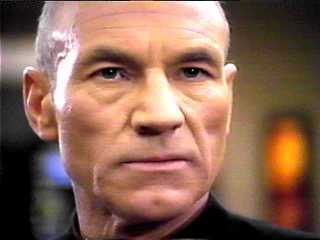
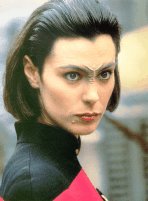
It had never occurred to me that there might be money to make in writing fan fiction, but apparently some people do that sort of thing and it's even becoming respectable. Far be it for me -- an unpublished novelist -- to pooh pooh the works of those who have several books under their belt, expanding the universe of characters I hold dear. Indeed, some writers are able to do quite well in that genre, and there's something to be said for claiming a piece of Captain Picard or Ensign Ro for posterity.

But I'm learning about the people in my head right now. Maybe sometime in the future, I'll worry about those already created.

Sunday, September 24, 2006

Schrödinger’s Ball by Adam Felber

Warning: crappy first draft ahead

You don’t need a Ph.D. to enjoy Adam Felber’s debut novel, Schrödinger’s Ball, but having some understanding about physics will help to get all the jokes. In particular, it helps to know at least about the famous thought experiment of Dr. Erwin Schrödinger, who was competing with Heisenberg to determine what was going on with electrons. Luckily, Felber adds an unscientific history of the scientific debate (read pissing contest) that occurred between the two prominent physicists. After Heisenberg developed what became known as the Uncertainty Principle, Schrödinger created a cat, who was stuck in a box along with a device that will release radiation if anyone checks to see if the cat is dead. So the cat was both alive and dead – and not alive and not dead. Or something like that.

Schrödinger’s Ball starts with the unobserved death of Johnny Felix Decate (while cleaning a gun); at the same time, the president of Montana (yes, he seceded and set up his own country, which essentially included his own property -- on which he was late paying his U.S. taxes). Soon after, we find Johnny hanging with his gang; he’s our cat. Johnny and his friends Grant, Deb, and Arlene are drinking in Cambridge, Massachusetts (home of Harvard). Aside from Johnny’s ability to exist beyond his death, he and his friends have other talents. He may not be the brightest man in the world, but people will follow him. Deb experiences extended orgasms -- a half-hour is not outrageous for this happy woman. But she has no experience in love. Grant is brilliant but socially inept -- especially around Deb, who he quietly loves. Arlene is capable of much love, but is otherwise a killjoy.

In addition to defying death, Johnny has virtuoso guitar talents that turn him into a sort of messiah of music, with crowds of worshipping teens following him wherever he and his friends go. And Professor Schrödinger populates the streets of Cambridge as well, even though he died in 1961. Or is it Schrödinger? Does he always leave you with the check? And where are those cat meows coming from?

In a sense, the story is surprisingly predictable, in that you soon know that Grant will get the girl of his dreams (Deb). You’re pretty certain that neither Johnny nor Schrödinger are actually alive. But there are enough twists and turns and goofy secondary characters to keep those pages turning. (If no one sees you read, are you actually learning anything?)

This book will appeal to anyone who enjoys a goofy tale. And despite my comment about its predictability, it is also unconventional and its resolutions uncertain. Get your electrons moving and check it out.

Thursday, September 07, 2006

The Miracle Life of Edgar Mint by Brady Udall

When you’ve had your head squished into the hot gravel by the tire of a postal truck as a child, life ought to get better. But for seven-year-old Edgar P. Mint, life has only just begun, and his miracle survival of the accident was one of the easiest achievements of his life. Half Apache/half white, the young boy finds himself struggling to balance the life he lives and the life he lost as a result of the accident at the beginning of Brady Udall’s 2006 bildungsroman.

As far as Edgar is concerned, he grew up in a hospital bed; he has virtually no recollection of his accident –- except for what others have told him. During his several months of convalescence in a hospital, Edgar befriends one of his roommates -- Art Crozier, whose wife and daughter died as a result of his drunken driving. Edgar also meets Barry Pinkley, who was the doctor on call who refused to let the injured Indian die.

And the hospital is his home. Art, his other roommates, and the nurses form the basis of his family, replacing his alcoholic mother he doesn’t remember and the grandmother who was the only person who cried or prayed for him after the accident – as far as he’s aware.

But the hospital is also a place of ghosts, which he wards off with a pilfered urinal freshener. As is the William Tecumseh Sherman School for Native American orphans, located at the former Fort Apache, where his education takes place. The almost constant torment to which Edgar is subjected at “Willie Sherman” shapes his lonely, tribeless adolescence. Even when he becomes a part of the Church of Latter-Day Saints and is assigned to a (dysfunctional) Mormon family, ghosts and shadows of his past surround him.

But it’s the real people Udall fleshes out, giving nuance and subtlety to what could have been two-dimensional characters in lesser hands. Dr. Pinkley, for example, is dismissed and becomes a drug dealer, but throughout the rest of his life he remains one of the few constant presences in Edgar’s life (often to the boy’s dismay). Through Pinkley’s doing, even Edgar’s mother briefly reappears. Moreover, Udall writes with a wicked sense of humor that makes the pages of sometimes awful images seemingly turn themselves

Despite all the travails of his torturous life, Edgar’s tale ultimately holds hope for the future, and through the Mormons he discovers his life’s purpose: to find the mailman who ran him over and let him know he survived and is all right; indeed, to offer him forgiveness. After Edgar leaves the Mormons, most of the nagging inconsistencies of his past find resolution, courtesy of a bingo-playing woman in Pennsylvania.

Edgar Mint’s is not always a tidy story, but when you’ve got road pebbles falling out of your head as a child, perhaps it’s best to learn to suffer through the difficult times.

Sunday, June 25, 2006

Bird By Bird by Anne Lamott

Just about any aspiring writer has at least heard of this book, which is probably referred to as often as Stephen King’s On Writing: A Memoir of the Craft as an approachable, helpful text from which to learn. I’ve not read anything else by Anne Lamott, but in this book her sense of humor is inviting and infectious. She is honest and relates unattractive tales of her life that help show why she is the writer she has become. At times she gets a little preachy, but a brief glance at her other works shows that faith is a big part of who she is. So, if you accept the rule that writers must use their voice, not that of their favorite writers, then you must either accept her preachiness or just put the book down and move to the next item in the stack beside your bed.

I kept reading Lamott, and I was pleased I did. Published in 1995, Bird By Bird offers a classroom experience in creative writing –- regardless of whether you write fiction or nonfiction. Frankly, her advice isn’t earth shattering, and any writer should already have heard these tips a few hundred times. Still, the chief lesson I took from her was to allow your childhood vision to return and draw on it for your observations, which will inform your work. Be unafraid of what you say –- as you were when you were a child. Another helpful lesson is to accept that your first draft will be shitty and shouldn’t be seen by others. (From my experience, the second draft might be flushable too, and it’s probably best to not show anyone else that ugly thing floating around until it’s fertilized something beautiful.) And for you perfectionists out there, Get over yourselves! For most writers, such advice isn’t too hard to take, but it’s nice to know that a writer who has penned this articulate guide to effective writing practices what she preaches and has had her share of failures.

While I read Bird By Bird, I was reminded of John Irving’s The World According to Garp –- particularly the scene in which Garp discovers his mother has written about him in her book, which becomes a feminist manifesto. He becomes known as the “bastard son of Jenny Fields.” Lamott often talks about her son, Sam, and being a single mother. I wonder what this young man, who’s probably in his early twenties now, thinks of how he’s portrayed -– not that there’s anything wrong. Lamott also speaks about the death of her father, and the death of a close friend, which she has written about in earlier books. Indeed, her nonfiction is probably more successful than this fiction writer would like. But as the old saw prattles on: Write what you know. It’s not exactly how Lamott would say it, though. So find your way while I look further for mine.

Indeed, finding your way is the key. Persevere and know why you are writing. As Lamott says, if it’s just about making money, then you’ll likely be quite disappointed.