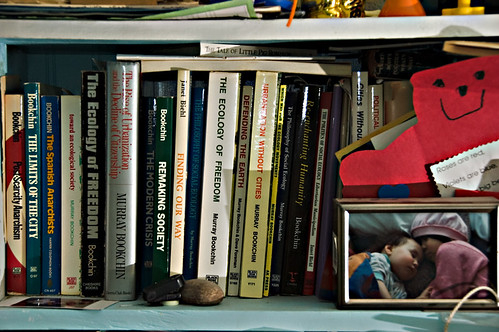
Over at AgentQuery Connect, there's a challenge going on: Post a title to see what readers think. Will they pull it off the shelf? Or maybe you can think of it as, if you were an agent and saw this title, would you be intrigued?
There have been many wonderful titles and a few that make you scratch your head — which is better than those that leave you simply passing by and looking for a different title. For writers who've never had a book published (and, yes, that rather large group includes me), it's a good lesson to engage in as we attempt to write a manuscript that attracts the eyeballs of people who pay for books (also a rather large group, thank goodness!)
But how realistic is it? Do you buy a book purely based on its title? Does the title have enough gravitational pull to attract your arm in order to slide the book off the shelf? Maybe, but I'm not 100 percent convinced. I'm one of those readers who loves finding new writers, but I tend to have them recommended to me by other readers. And when they do so, it's the writer's story, not the title, that I'm looking to fall in love with. That's how I met the works of Michael Chabon, Christopher Moore, and John Connolly — three writers whose individual styles and voices all appeal to the reader in me.
Had I been looking for adult books to read in the early 1970s (I was still engrossed in the Richard Scarry and Dr. Seuss collections at that point), would I have picked up Carrie? Probably not. What about Moby Dick? What about that title screams white whale or obsession? Rudyard Kipling's The Elephant's Child? Definitely, but I'm an elephant guy.
Mind you, I am not saying titles are unimportant. Perish the thought! Because people do skim the shelves and find writers they didn't know. A title can attract someone's attention. It's the first step. The hopeful reader slides the book out a little bit. Is the cover art appealing? Yes, off the shelf it comes! Perhaps she stares at the cover a second more, hoping the author's name or the title suddenly ring a bell. If not, the next milestone is turning the book over and reading that back blurb. Remember all that work that went into crafting your query? You have even less time to attract the reader on the back cover than you did when you were trying to ensnare an agent's interest. I've stopped reading before the first sentence was done. Back to the shelf with you!
Perhaps the book has an inside flap. Bonus! Those are great ways to gain a reader's confidence. I've bought books based on the inside flap. It contained the bones of a story. But that half-ream of dead trees in between the covers needed to be filled with flesh and blood, sweaty excitement and tangy irony if the writer wanted me to remember her name and inquire about another tryst.
You know when a title has mattered to me? After I was done. Has this happened to you? Have you finished a book and found yourself wondering not about what would happen next to those characters you just fell in love with, but rather about why the author (or agent, or editor, or marketing department, or publisher) decided to call it That. To me, that's when a title's problems come to the forefront.
What about you? Do you buy a book based on its title?
To live like an elephant is not only to never forget, but to do one's best to endure. The Elephant's Bookshelf is a place where you can share cherished books and stories -- old and new -- with other readers, writers, and elephants. Post your thoughts on writers, reading, and writing.
Showing posts with label reading. Show all posts
Tuesday, August 02, 2011
Monday, July 18, 2011
Familiar Ground
Sometimes I go through phases. A year ago, I swept through the John Connolly books again, and not long before that I was into Christopher Moore for a second go-round. I can always crack open Tolkein, but after you've read it a dozen times, you start to wonder why you want to make that type of time investment again; the pleasure of reading is very much still there, but ... well, sometimes you crave something different.
So I've decided to dive into short stories again. I've been getting into the One Story items that I don't always have time for when they arrive. The joy of short stories is, even if they're not great, they're not so long that you feel like you wasted your time. And when they're really good, you feel like you've discovered a new element, seen a shooting star, or met the person of your dreams. You're willing to keep learning more about that writer. Of course, sometimes when you do so, you find out that the element was discovered long ago, or it was just space junk, or maybe she isn't nearly as pretty as you thought in the dark bar.
So, what do you do when you're not sure what to read next?
Sunday, April 19, 2009
Rereading Is Like Falling in Love Again
I recently began rereading John Steinbeck's The Grapes of Wrath — right after finishing John Connolly's The Book of Lost Things for the second time in three years. Of course, this isn't the first time I've reread something. I've read John Irving's The World According to Garp numerous times. (And what is it I seem to have for books written by people named John?) But it's interesting to go back to a world, an era, a setting that was familiar once and becomes even more detailed and nuanced again.In the case of The Book of Lost Things, I had been singing the book's praises so much that I initially worried it might not be as good as I'd remembered. But I loved it once again. A coming-of-age tale set against well known fairy tales and laced with grim battles that would keep young children stocked with a month of nightmares, TBOLT vividly traces the path of an angry boy through a world of his fears and fantasies. Connolly, a gifted writer, can choose words that linger like a scar. And when one faces man-like wolves and crooked men that personify evil, that gift gets ample use.
Steinbeck was one of my first "adult" loves as far as literature goes. While some teens were discovering J.D. Salinger's Holden Caulfield, I was getting enwrapped in Steinbeck's simple declarative sentences. I'd forgotten where Grapes began; in my mind it was the scene of the "land turtle" that gets flipped onto its back, a symbol of the traveling Okies struggling to survive both the Depression and the Dust Bowl. And while I've been reintroduced to preacher Jim Casy, I'd forgotten how he recalled his trysts with the girls after preaching them into a fervor. (After all, it's been decades since I read this work.) But it's still the same gritty, difficult era that I remember and which still catches me surprised.
Perhaps saying that rereading a book is like falling in love again is going too far, but it's certainly enough fun that such dreams and sentiments are within the realm of possibility. And that's what good fiction provides.
Labels:
John Connolly,
John Irving,
John Steinbeck,
reading,
rereading
Sunday, March 08, 2009
English Reader = Liar?
So, what good books have you lied about reading? According to a recent Reuters article, nearly two-thirds of Britons surveyed have lied about having read particular books. Their most popular book to lie about is George Orwell's classic 1984. (I swear) I re-read that after the start of the War in Iraq in 2003, to remind myself about the concept of doublethink. Other popular unread books were War and Peace by Leo Tolstoy and James Joyce's Ulysses. I don't know what books Americans have lied about reading. Anyone care to venture the books you've falsely claimed to have read?
Liar, liar, pants on fire.
Labels:
British,
English,
George Orwell,
James Joyce,
Leo Tolstoy,
lies,
reading
Tuesday, March 03, 2009
More Foolish Stuff
It's amazing what slides in under the electronic door! In my elephantsbookshelf@gmail.com mailbox, I received a very nice note from the assistant producer of KQED, the public broadcasting network in San Francisco.He wanted me to share with my wonderful readers (and followers!) that Christopher Moore recently stopped by their studios to record a chapter from Fool.
Having read the book, I know that it's a lot of fun (perhaps a bit too bawdy for some, but in a past life I was a groundling.) I'm going to check it out, if for no other reason than to hear what Christ Moore's voice sounds like.
Have fun, fellow Fools.
Saturday, January 17, 2009
It's True, Fiction Is on the Rise!
Now this is good news! The National Endowment for the Arts is reporting that fiction is becoming increasingly popular.After twenty-five years — a generation — the downward trend toward reading fiction has reversed. But this report asks people whether they've read at least one novel, short story, poem or play in the past twelve months. One. Uno. I believe most people have at least one imaginative thought per day. Can't more than half of America read more than one piece of literature during a year?
I'll take the good news and happily praise Americans for getting back on their duffs as long as they're reading literature — even bad poetry is better than nothing at all.
But I look forward to the day when at least 15 percent of Americans say they read at least one piece of literature per month. I haven't drilled down into the report to see how far off from that mark we are, but I don't expect it's anywhere near that.
So read up, America! Fiction, nonfiction, newspapers, poetry. Order a subscription to One Story or visit your local library. Imagine gas is still close to $5 a gallon and take the train, where you can read during your commute.
And while you're at it, imagine. Imagine a world without literature. It's a dark, dismal place. People are despondent, hopeless, angry. It's worse than what you see today, because half of America reads literature. But if everyone read just a little bit, I suspect the world would become a bit brighter, a bit more hopeful. Perhaps it might even spur the imagination and inspire ways to turn the economy around. Just imagine!
Saturday, December 27, 2008
2009: Predictions for the Year in Reading
Soon we will turn the page on 2008. To my mind, not a bad year over all, though I know of many people who don't have the same affection for 2008. I have much to be thankful for: a good year at work, though I can do more; the joy of impending fatherhood; I got my novel in shape to be seen by agents. And I read a lot of books.I'm not quite prepared to go over what I read that most impressed me. (After all, who really cares what someone else has read, unless they can say well why someone else should read it?) But I think I can offer a few thoughts about what I and other hardcore readers will be reading in 2009.
I expect to see lots of Dress for Success and job-search books on the trains this coming year. I don't know whether ye olde What Color Is Your Parachute is still a go-to help book in this Internet, "information era" age, but there's probably something of that ilk that'll be flying off the shelves -- at least at the library, since no one has any money any more.
Other books of choice will be along the lines of "How to do more with less." As someone who grew up with Depression-era parents, I feel well indoctrinated about that sort of lifestyle. I've always been frugal, and with my kids on the way, I'm sure that'll continue.
I suspect that there'll be a renewed interest in stories of the 1970s, because that's the era that will be most similar to what we're embarking on. The Great Depression, with its breadlines and Hoovervilles just doesn't seem quite as likely as the '70s lunchbox, baby-sitting relatives, PBJ sandwiches, TV dinners, and other forms of parsimony. I wonder if That '70s Show will stage a revival...
But I'm a fiction writer. What's in it for me? I honestly don't know. I suspect that fiction could become slightly less popular than it already is — and it's already fairly unpopular. So read up America! Fiction, nonfiction, whatever you enjoy. And keep or gain employment. Keep this country literate and great!
Labels:
1970s,
2008,
2009,
fiction,
Great Depression,
nonfiction,
reading,
recession
Saturday, December 06, 2008
Ben Franklin and the Slow-Moving Book
I should know better. For the past couple of weeks, I've been reading A Great Improvisation, which is a history about Benjamin Franklin's work as ambassador to France during the American Revolution, written by Stacy Schiff. I have always admired Franklin, though my real understanding of his work is based on childhood schoolbooks and movies.The book is well written and obviously well researched. But God, is it slow! Of course, I began it while I was still working on my NaNo novel, which meant I read it mostly while on the morning portion of my commute. Still, nonfiction — especially densely packed nonfiction — tends to only go at about a 20-page per morning pace, whereas I usually knock out about twice as much for a novel.
But these types of books also allow for a better sense of what a character looks like, and that's nice every once in a while (though I very much enjoy imagining what a person looks like). And a history can inspire other ideas — screenplays, for example, other histories, even plays. I only have a hundred pages left of the 400-plus, and while I probably won't finish it this weekend, I should have it back on a shelf before next week is relegated to history.
Labels:
Benjamin Franklin,
history,
inspiration,
reading
Sunday, October 05, 2008
This Was Surprising
There's less than a day left in my poll on the Elephant's Bookshelf, and I must say I'm a bit surprised. Not by the "record" number of responses — seven in my second-ever poll on a blog that is lucky to get 50-60 visitors per day — but rather that the answer I threw in almost as a joke has received three of those votes.I love math. I even started off college as a math major (tried to do the whole Renaissance man thing, but it never quite impressed the girls as much as I'd hoped). But on a blog that's basically about reading and writing, I didn't expect to see so much interest there.
Perhaps it's the Danica McKellar influence.
Sunday, September 28, 2008
Thanks for Voting!
Thanks to those who voted in the first poll on the Elephant's Bookshelf. Looks like those who come here are probably readers or enjoyably sarcastic (yeah, as if I can extrapolate anything from four votes, but I do appreciate them all).
As you might expect, the polls will be related to books, reading, and writing. If you have any that you'd like to suggest, feel free by emailing me at elephantsbookshelf@gmail.com or by posting a comment here.
Thursday, July 31, 2008
What the Kids Are Reading Now
Indeed, I applaud it; at least people are reading. And I believe that people are not afraid of writing for themselves. The explosion of blogs and social networking sites and twittering tidbits of foolishness at all hours of the day are strong anecdotal evidence that people are writing more now than they ever have.
I also know from experience that some kids are more likely than others to read books. Back when I was driving kids from schools to a YMCA for an afterschool program, there was one kid in particular (I think he was in first grade when I met him) who'd graduated from picture books to those in which only an occasional sketch was included (think Charlotte's Web or the original Winnie the Pooh books). He even remarked to a friend about how adults read books without pictures as though the concept was incredible.
Still, I can't help but see a healthy dose of pomposity in the views of those in the article who believe children can't learn without reading great books. Of course, they need first to be literate; it's a crucial life skill on par with the ability to communicate (note, I didn't say speak. Moreover, even the most affected by autism are able to communicate as long as we are willing and able to learn how to do so with them.)
I read often — great books, mediocre books, magazine articles, Web sites, academic studies — so I realize I'm not quite the average reader. But there are things I've not even thought of as readable areas that the kids described in this article devour.
Fanfiction.net, for example, is a site I've heard of but that's about it. It doesn't look familiar, so I'm not sure I've ever examined it before. But the girl in the article reads reams of Web pages there, eschewing television. Say what you will about the value of "great books," but I believe a kid who is that devoted to reading now is more likely to both read and possibly write as an adult. Good for Nadia!
Deeper in the article, there's a reference to a 2006 study that found, among other things, that the only kind of reading that related to higher academic performance was frequent novel reading, which is directly related to higher grades — especially in English. The key value of reading book-novels, academics argue, is that it allows readers to mentally chew over the ideas proffered in the works. Indeed that's true, and when people have read books in common, this spurs conversation and further reflection, which embeds the ideas deeper into a child's or adult's brain. This is where the Web is perfect!
So, if I can suggest anything in this post, it would be to encourage everyone to read — novels and short stories, works of nonfiction, newspapers, Web sites, the NYT article from which this post is inspired — and then talk about these things with other people. Reading fosters intelligent discussion. Conversation builds community. Strong community bonds can instill more democratic governance. There's a slogan in the waiting: Literacy Builds Democracy. I think both Republicans and Democrats can support that.
Labels:
books,
literacy,
New York Times,
reading,
technology
Tuesday, April 22, 2008
Celebrate World Book Day
Got a book? Good. I hope you're reading regularly. To a certain extent, it doesn't really matter what you're reading, as long as you read. Because not everyone can. Today is World Book Day. [Author's note: Apparently I'm wrong; World Book Day was on March 6 -- though I've seen it posted as 4/23 also. Regardless, I'd forgotten about it until after seeing a Google blog link and writing about it. But I still believe in the importance of writing.] Unlike some Hallmark Holidays, World Book Day can actually do something more valuable than sell cards. It's designed to promote literacy. The Google blog page that I linked to above contains a link to its Literacy Project, where it promotes a few smaller projects.
That's all well and good. For those who can already read, however, I want to say, "Keep reading." It's good for you. Allow your mind to expand in ways that illicit drugs never will touch. Develop your imagination.
How's this as a way to promote literacy: literacy leads to exploration, exploration leads to imagination. Imagination leads to having a mind that can comprehend wondrous pleasures. ... Literacy leads to better sex. QED.
Labels:
books,
imagination,
literacy,
reading,
World Book Day
Saturday, April 05, 2008
Death of the Sentence
Is the sentence dead? Can Johnny learn to spell? Or is it "too" spell? Sigh.
I can still write sentences. Subject. Verb. Whoops, maybe it's not as easy as I thought.
The New York Times is trying to scare us. The problem is, they don't go far enough. According to the Times, kids can't write sentences well any more, in part because they don't write them often; instead they write text messages and grammatically disgusting items in their MySpace profile and their IM conversations. Be that as it may, the problem isn't just teens. I know many adults who are God awful writers. What's worse, many of them don't realize it because they don't know what it means to read either.
Sure, they can tumble over the collections of consonants and vowels and grunt or utter seemingly coherent thoughts, and they can recite the words that appear on the screen before them. Just don't ask them what it means.
According to this article, in Mississippi only 15 percent of eighth graders can write proficiently. Fifteen percent! For the innumerate among you, that means 85 percent of 14 or 15 year old kids in Mississippi can't write. Methinks there be a literacy problem in this country. For tis not only Mississippi where there be problems.
I don't buy the Times' whitewashing of the statistics. For example:
While 33 percent of eighth graders writing with proficiency may not sound like a lot, it is the best performance by eighth graders on any subject matter tested in the national assessment program in the last three years. Smaller percentages of eighth-grade students have performed at the proficiency level in reading, math, science, civics or history tests. Only 17 percent of eighth graders managed a proficient score on the nationwide history exam in 2006, for example.
Bullshit. Thirty-three percent is terrible. No ifs ands or buts about it. If it's better than three years ago, that's good, but the performance is still terrible. How can we allow any of these kids to run for elected office thirty-forty years from now? Are we going to become a society that is more split between educated and uneducated than we already are? That's just asking for trouble.
Certainly, a couple comments on the cusp of diatribe from yours truly are not going to spur a shift in national education. Neither will a few million donated by Bill Gates, though it's a better option than my blather on this itty bitty blog. But I can't help wondering why this isn't a larger issue in the presidential campaigns.
I'm curious, could this be a national security issue? If our soldiers can't read their orders proficiently enough, might they do something improper? To be honest, I have much more faith in our forces than that. I've met a few active soldiers over the past few years, and not one of them has struck me as an aw-shucks idiot or wide-eyed fool. I don't know what it's like in the trenches, but in airports and on sidewalks, they say the right things. I'm proud of them. We all should be.
But I'm still concerned about the kids over here. Harry Potter is done. Can our kids read anything else? And how many of the kids actually read those books and how many waited for the next movie? When peace returns, will our soldiers be able to understand their union rules?
I'm off on a rant here, but my point is this: How can we be a great country if a large number of our kids can't read? I'm not stupid, but I can't find an answer to that.
Labels:
grammar,
literacy,
national security,
reading,
soldiers
Monday, February 25, 2008
Vacation Reading...

Ah, vacation... I remember vacation. I get to sleep late (even though my body remains used to waking around 6), I get to do pretty much whatever I want, and I get to catch up on things that I put off.
And I spend most of my time reading and writing. At the moment, I'm taking a break from the revisions to my novel. I've met with my half dozen readers and paid them in alcohol, which helped to elicit honest assessments and criticisms that they were initially reluctant to express. Thank God for alcohol!
The comments that they made have been very helpful. I've got scenes to add, some to consider dropping or toning down (apparently a sex scene was a bit too much for most of my readers), and reason to be hopeful that this is a publishable novel that can be used to build an audience. Now I'm putting all that effort to good use.
So that's what I'm doing with my vacation. Plus I'm reading Bad Men by John Connolly. This is not one of his Charlie Parker novels, though it is set in Maine and Parker makes a brief cameo within the first hundred pages. As a result, Connolly takes many pages to develop new characters, and his usually quick pace is bogged down in details.
I'm 140 pages into Bad Men and I wouldn't give it a rousing recommendation yet. While I briefly considered putting it down and starting something else for the hours I'm not reading and revising my novel, I decided that since I'm on vacation I can take a leisurely pace in my reading too. Plus, I thoroughly enjoyed Every Dead Thing, The Killing Kind, and The White Road -- and especially The Book of Lost Things -- that I feel Connolly has earned the right to start off at a different pace.
Ok, break time is over. Back to my novel.
Labels:
Charlie Parker,
editing,
John Connolly,
murder mystery,
reading,
vacation
Sunday, January 20, 2008
The Backstory of the Lock
This woman had a good idea, especially for readers who are into 18th century literature. Since I've been doing some research on the American naval hero John Paul Jones, I've regained some perspective on the 18th century -- an era I don't think I've given much thought since junior high history class. I studied Alexander Pope's Rape of the Lock in college, but I've mostly forgotten about it.
Professor Sophie Gee, who is teaching at Princeton University, decided to write about the story of what led up to the tale described in the epic poem. Her debut novel, The Scandal of the Season, was published last year by Scribner. In a release that appeared on Princeton's Web site, she explained how she came to write about the real people who were the basis of Pope's mock-epic. Pope came to London as a poor aspiring writer and is able to insinuate himself in the world of the characters of the Rape.
"As a scholar you try never to jump from fact to fiction," Gee said. "At first I was extremely uncomfortable about it, but then I realized that what I was doing was giving a psychologically compelling account of what we do know, putting in feelings along with historical facts."
She's conscious of the danger of a professor creating fiction out of real people. One of Gee's challenges was to write the scene in which Pope and Swift meet for the first time, according to the release. She knew they had met in London during the period in which the novel is set, so she imagined the rendezvous at the opera, penning a scene in which the young Pope approaches Swift as he scoffs at the vanity of some fellow clergy members in the audience. The two writers later became great friends.
"It was thrilling to have a chance to inhabit a historical moment like that, because it was such a momentous literary encounter," she said.
But she has received strong reviews. The New York Times Book Review described it as "a clever and inviting piece of critical biography masquerading as a light comedy of manners."
In her teaching she is able to make the archaic references of 18th century literature accessible to today's teen agers and young twenty-somethings. For example, she juxtaposes the great satirist Jonathan Swift with the premier satirists of today: Trey and Matt of South Park fame.
I can tell I'd like this woman. She has always wanted to be a writer, she recognizes that a writer needs to be a strong reader, and she loves Irish literature. I'd enjoy spending a pleasant pub conversation with professor Gee!
Labels:
18th century,
Alexander Pope,
epic poetry,
fiction,
Princeton,
reading,
Sophie Gee,
South Park
Tuesday, January 08, 2008
One More Reason to Resolve the Writers' Strike

We've all heard the old maxim, "Give a man a fish, he'll eat for a day; teach a man to fish, he'll eat for a lifetime." My response usually is something along the lines of: "That's fine for you, but I live nowhere near fishable waters?" (Yes, I am a smart ass, why do you ask?)
What does that have to do with the state of children's literature? Well, the Librarian of Congress, James Billingon, has created a new post: National Ambassador for Young People's Literature. Anyone who has read this blog o'mine should be aware that I'm all in favor of encouraging young people to read. Indeed, I think it's one of many things that are crucial to our future (among the others, teaching math and science -- especially to girls).
Jon Scieszka (pronounced SHEH-ska) has been given this noble task. And his mission is to convert young people into readers. This is where that desert idea comes in. I hope to be convinced otherwise, but I suspect strongly that just as parents in desert areas become parents to children who know little of life outside of the desert, so too with parents who don't read -- their children will not be readers. Trying to get these children to develop a love for literature is the challenge of a lifetime, and I wish Mr. Scieszka well. He'll need a lot of help.
“There’s a huge population of kids who would be or can be readers, but just choose not to,” said Mr. Scieszka, who runs a Web-based literacy program aimed at boys called Guys Read. “Kids see it just as a school activity or something that just can’t compete with a Nintendo Wii or just hanging out and text messaging your friends. Parents and booksellers and teachers are dying for some help.”
What gives me hope here is that the folks who selected Scieszka realized they needed to find someone who could speak with commentators who literate folks listen to, like Jon Stewart of A Daily Show (I'm not sure why they changed the name this week, though I assume it has something to do with the writers' strike.
There's hope for the future of reading. Come on kids, let's go to the beach. Get your rod and reel.
Friday, January 04, 2008
Vacation Reading

I don't know about you, but I'm wearing an undershirt beneath my button-down shirt, and during my commute today and yesterday I wore a sweatshirt under my ski jacket. It's been frigging cold here in the Northeast! At the same time, my wife had clients desperately trying to book a job through her that would have placed them on a plane for the Bahamas this weekend.
That's right folks, it's only a few days after New Year's and it's already winter vacation time!
So what are you reading?
I passed over this article in today's New York Times, but now that I've warmed myself up with a pint or three, I've taken the time to savor the sage words of journalist Steve Bailey (who I've never heard of before today). I almost stopped reading the article because it sounded like he wanted to talk about how to impress people who visit your home (again, I had been drinking, so I may not have read as closely as I usually do), but eventually there was a point -- albeit, not an especially important one -- Know who you're supplying with books.
If you visit our house, you'll find books in every room, including the unfinished basement and attic. Hell, there are even magazines beside the cats' litter boxes, to say nothing of the library in the bathroom. But our home is clearly not a vacation home. We don't have a "weekend home" (another reason to drop this article before its end). Nor do I give a rat's ass whether my guests with toddlers are au courant or de rigueur when it comes to American children's literature.
All that out of the way, I must say that the mere idea of taking a vacation in a place where books of quality -- nonfiction, fiction, children's literature, poetry, Penthouse Forum -- are kept in the bookshelves around me sounds oh so appealing right now, as we cuddle up beside our computers and the winter wind blows outside. What I wouldn't give to lay in a hammock beside the ocean underneath a palm tree while reading a good book! Hell, I'd do it with a bad book!!
So tell me, what do you read on vacation?
Thursday, December 27, 2007
Most Literate Cities

I hope I have readers who are Twins fans. Minneapolis and St. Paul, the Twin Cities, are one and three, respectively, on the latest "Most Literate Cities" survey.
But reading is declining overall, and that's a concern I share with the surveyers. "We're getting higher and higher educational attainment levels, and at the same time we're getting fewer and fewer behaviors (that reflect) what we think educated people ought to do," said researcher Jack Miller, who's been conducting this survey for the past five years.
I still maintain that people read a lot. The studies showing how many people skim through Web sites while at work should indicate that. But people are not reading for pleasure, and they may not be retaining well what they read. Another caveat of this story: It seems to point to a decrease in newspaper reading as a sign that reading is declining; it may simply show that people are getting their news from different sources -- the Web in particular.
Labels:
literacy,
newspapers,
reading,
research,
Web sites
Saturday, December 08, 2007
Read for Fun, America!

I meant to write about this weeks ago, but I was having too much fun reading other things. Back in November there was an article in the New York Times about how fewer people are reading for pleasure. It was based on a National Endowment for the Arts study. It got me thinking: What does this say about the state of publishing?
I believe that lots of people read for fun. I see it on the train every work day. But I'm also seeing a lot more people using their portable DVD players, and it seems every other person has iPod buds sticking out of their ears. And of course, there are several masochists who do work on the train (full disclosure: I do too, sometimes, but I don't enjoy it).
Books and a train commute are a perfect combination, so why aren't more people reading? Perhaps it's because so many books out there suck. A possibility, at least. But I suspect it's because the marketing doesn't know how to build or develop an audience -- especially for mid-list writers. Let's face it, it's easy to publicize a Stephen King novel. He's got years of successful novels under his belt and has connected wiht his audience better than any writer I know of. But why don't more people know about Christopher Moore? He's funny, he's entertaining, he's occasionally irreverant. Lord knows how many people are fans of his type of story, but it's a lot. This past year, when he released You Suck, the book was reviewed by the Times. Yet, there aren't enough people who know about him. I mention his name to other voracious readers, and they've never heard of him; when they read him, they like him.
One of the reasons I created this blog was to promote writers I like (of course, no one reads this either, so there you go!). I don't mean promote in the marketing sense; lord knows I'm no marketer.
Ultimately, I hope to create an audience for my books, which I think people will enjoy and believe they'll enjoy the subsequent books I produce. I'm sure this is naive, but I'm looking forward to speaking with readers, even if they challenge me to justify scenes or characters or a story's premise. The author is the best marketer for his or her work, but authors need publicists and strong editors and a team of professionals to make things sing. That's one of the reasons why publishers get the percentage of sales that they get; they're paying for the risk and for the overhead.
As readers, we don't have to worry about all that. We just have to read and enjoy. So read for fun, America! Use the imagination that you've been blessed with!
And if you happen to be on my blog, let me know what you've been reading and why. I'll share it with others. Let's get more people reading!
Labels:
Christopher Moore,
marketing,
New York Times,
publicists,
publishing,
reading,
Stephen King
Monday, November 26, 2007
Why Do You Read?

I just noticed this article, which appeared over the Thanksgiving weekend in the New York Times. It asks a fundamental question: Why do we read?
I'm rarely without a book or other reading material at my disposal, though I'm not so addicted that I'll read the shampoo bottle every morning.
Anyone who's visited The Elephant's Bookshelf knows that I have eclectic reading tastes. But what about you out there? What do you like to read and why? Cammy? Frank? Care to start us off?
Labels:
books,
fiction,
nonfiction,
plays,
poetry,
reading,
short stories
Subscribe to:
Posts (Atom)