Sunday, May 11, 2008

Was It Good for You Too?

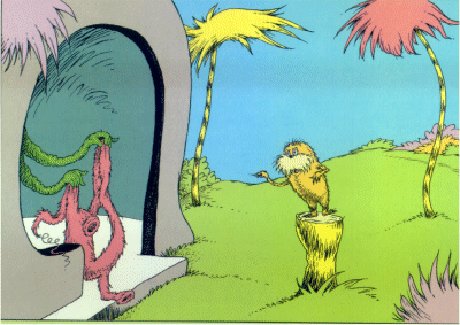
Don't let the image scare you, I won't allow this blog to get too graphic. But the Los Angeles Times reported recently that there's a possible trend in literature: kinky sex. I can't say that I've noticed such a trend in the contemporary novels I've been reading. Sex, sure, but nothing too kinky.

While I'm no prude, I don't feel a need to read about gratuitous sex in the books I read. But if a character's development is directly related to sexual experience, then I think it's certainly appropriate.

Sounds obvious, perhaps, but this is something that is not always easy to determine. One thing that the selected readers of my novel commented on was the vivid details of a sex scene. One of my primary characters loses her virginity, and I may have offered a bit more detail than some (though not all) of my readers would have preferred. My argument was that the girl's experience was important to her development and to the story; she was a teenage girl somewhat obsessed with the idea of sex. She would remember every detail. That's all well and good, my readers said, but we can imagine much without seeing everything.

I think they're right, and I've toned down the sex scene to a great degree. It's still quite apparent what's going on, but I leave more to the imagination.

In the LA Times article, however, the amount of erotica that is involved would clearly alienate some readers. Personally, I want to develop an audience. As a first-time novelist, I'm not sure freaking out some readers is worth the bad word-of-mouth it engenders. Finding the balance between developing readers and developing an authentic voice may be one of the most difficult tasks for any writer.

Monday, May 05, 2008

Would You, Could You With a Book?

First off, I want to call attention to something that I'm somewhat proud of: This is my 100th post on this blog. Not a big deal in the grand scheme of things, I realize; some big blogs may reach 100 posts or more per day. But The Elephant's Bookshelf is a labor of love and found time. I love to read and to write, and I want to share my thoughts on writing with others. So, I'm happy to reach a random milestone.

Personal backslapping over.

Today, I happened upon this piece in the Washington Post. Apparently, Harry Potter isn't the biggest thing (PDF) since bread with the crusts cut off in the world of children's reading. While J.K. Rowling's justifiably popular series is still a huge best seller, Harry, Ron, Hermione and the rest of the Hogwarts contingent still can't hold a wand to the creatures of Dr. Seuss's imagination.

Also ahead of the Potter books was Harper Lee's classic To Kill a Mockingbird, proving that the list wasn't dominated merely by books most read by small children. Further emphasizing that point, the S.E. Hinton stories were also up among the top 10.

Weep not for the wizards and witches. The Potter books will stand the test of time. But it's nice to know that children still love to explore worlds of imagination that don't cause their thumbs to develop carpal tunnel syndrom.

Wednesday, April 23, 2008

Alice Munro and the Know-It-All

I've been in a reading slowdown. I won't call it a slump; slumps are for aging first basemen. I know exactly what has caused my slowdown: slow moving or long books.

And I've been enjoying every turtle-paced moment of it.

Right around the beginning of April, I began reading Alice Munro's collection of stories Hateship, Friendship, Courtship, Loveship, Marriage. Each of these stories is exquisitely paced and developed; every character has depth and meaning. I could read it again three times and discover new traits in everyone at each passing. This Munro dame knows how to scribble. A book like that should not be consumed with a deadline in mind (Must read a book a week. Must read a book a weeek...) No, if I were to teach a course on writing, I'd want to invest lots of time in the works of Munro exploring how she animates these characters so well.

Perhaps it's because it was the last story, but "The Bear Came Over the Mountain" is especially memorable, and I say that not to be ironic; it involves a woman who becomes demented. (I don't think they specifically say it's Alzheimer's disease, but it sounds like it.) And "Floating Bridge" provides some fairly obvious symbolism, but remains a poignant story of a woman dealing with cancer.

Once I completed that book, I dove into A.J. Jacobs' The Know-It-All, and have been pleasantly suprised. This is essentially a memoir by a journalist who fears he's begun to lose the mental sharpness he had when he was younger, so he decides to read the entire Encyclopedia Britannica. His quest, he claims, is to become the "smartest" person on earth. Of course, within the first twenty-five pages there begins the inevitable discussion of the difference between knowledge and intelligence. Indeed, it is a theme that continues throughout the book.

That was one of the most surprising aspects of this book, actually: there are themes. It is as much a description of a middle-aged man who desperately wants to become a father and to pass along a legacy of a love for knowledge -- which he received from his father -- as it is a recitation of what he's learned. And the book is quite amusing at times. I've had several instances where I've chuckled loudly on the train. You don't get too many of those moments with Alice Munro.

I expect I'll finish The Know-It-All this week, and I've not decided what's next. I may return to John Connelly or pick up something else. I have a Peter Carey novel waiting to be cracked. But Munro and Jacobs have reminded me why I love reading in the first place: Books take me away from the mundane and can make me laugh. I don't need an iPod.

Tuesday, April 22, 2008

Celebrate World Book Day

Got a book? Good. I hope you're reading regularly. To a certain extent, it doesn't really matter what you're reading, as long as you read. Because not everyone can.

Today is World Book Day. [Author's note: Apparently I'm wrong; World Book Day was on March 6 -- though I've seen it posted as 4/23 also. Regardless, I'd forgotten about it until after seeing a Google blog link and writing about it. But I still believe in the importance of writing.] Unlike some Hallmark Holidays, World Book Day can actually do something more valuable than sell cards. It's designed to promote literacy. The Google blog page that I linked to above contains a link to its Literacy Project, where it promotes a few smaller projects.

That's all well and good. For those who can already read, however, I want to say, "Keep reading." It's good for you. Allow your mind to expand in ways that illicit drugs never will touch. Develop your imagination.

How's this as a way to promote literacy: literacy leads to exploration, exploration leads to imagination. Imagination leads to having a mind that can comprehend wondrous pleasures. ... Literacy leads to better sex. QED.